One of my New Year’s resolutions is to improve my work ethic. I envy authors like Robert Silverberg and Brian Keene who put out quality work consistently and prolifically while balancing multiple other projects. While I’m nowhere close to them, I’ve found a set of rules that I think will help me achieve my resolution.
When I need inspiration, I often watch interviews of authors on YouTube. I’ve found so many helpful nuggets of information in the process. One came from George R.R. Martin. In it, he mentioned Heinlein’s Rules for Writing.
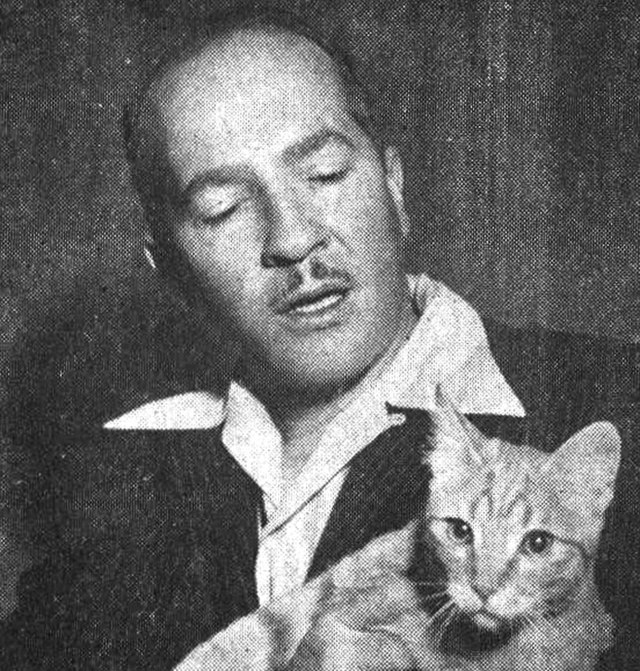
Robert A. Heinlein was the dean of science fiction writers and one of the Big Three. I’ve read three books by him, none of which I particularly loved, but I can appreciate his talent. He laid out five rules:
1. You Must Write
As simple as it sounds, this is the most important rule on the list and one that I often struggle with. Procrastination is my greatest foe. I can’t count the hours that I’ve wasted when I could have been writing.
Likewise, I have a horrible habit of dragging things out. The novella that I finished writing earlier this month took 2½ months to outline. My perfectionism stalled me. It should have taken 3 weeks at most.
As a concrete goal, I hope to write 80,000 words this year. Ambitious, but not overly so. I was inspired by SF great Robert Silverberg who wrote a million words a year. Clearly, I have a way to go.
From now on, “You must write” is my mantra. I allot four hours a day to writing, and by gum, I plan to make the most out of every minute.
2. You must finish what you start.
Already this rule has helped me immensely. As I mentioned in a post earlier this month, I was about to abandon my novella Beyond the Dark Shore, but Heinlein’s second rule forced me to keep going.
In the end, I was happy with how it turned out. And I saved it from the graveyard of so many other abandoned novels, novellas, and stories. I hope to apply this rule to every writing project from now on.
3. You must refrain from rewriting except on editorial order.
This one is a bit confusing. George R.R. Martin explained it in the interview. It doesn’t mean you can’t improve on your first draft. It means don’t mess around with it once you start submitting. Unless the editor of the publication says you should.
A few years back, I got the edits for an anthology I was part of. Usually, these are no more than a handful of grammatical errors. But this editor gave me dozens of big corrections. It demoralized me at the time, but the changes he suggested were things I hadn’t even thought of, and it greatly improved the story.
4. You must put your story on the market.
Up until now, I’ve mostly written “on spec” stories for horror anthologies. As I get more and more into science fiction, I’m eager to submit to the genre’s incredible short fiction market. I’m working on an SF story right now that I hope to send to the big magazines as soon as it’s done (before inevitably sending it to the smaller ones).
5. You must keep it on the market until it has sold.
My story “Ink” might be the best horror piece I’ve ever written. It was rejected three times, and after that, I just gave up on it. How could my lesser work get published and not this? Well, I realized, it was because I hadn’t submitted it enough.
I’ve reached the point where rejections don’t bother me as much. That’s not to say I like them, but I understand that certain stories don’t fit with what the editor envisions. Charles Bukowski saw rejection slips as fuel, famously wallpapering a room with them.
I don’t want to damage the paint on my walls, so instead, I keep a tally on my whiteboard of rejections and acceptances (the rejection column has many more tallies). So far it fits on the board. I plan to run out of space soon.
—
I feel the five rules above separate the amateur from the professional. Looking at my work ethic last year, I seem like more of a hobbyist. While it may be a long time before I can live off my writing, I hope to use the same focus and motivation that authors like Heinlein and Silverberg did.
I’ve posted the above rules in my study next to my computer as a constant reminder. At the top of the list is You must write. And that’s what I plan to do.
Tchau,
Zé
 Zé Burns | Blog